Anyone can fake a document now, and detection isn't keeping up.
Generative tools have collapsed the cost of forgery to seconds. The path forward isn't better inspection, it's documents that prove themselves.
Five years ago, forging a pay stub took skill. Today it takes thirty seconds and a free website. Forging a certificate of insurance, a bank statement, or a college transcript is no harder. The cost of producing a convincing fake has collapsed to near-zero, and the supply of fakes has expanded to match.
The natural response is to inspect harder. Examine the metadata. Look for telltales. Run the document through an AI detection model. This is a losing fight, and it has been losing for a while.
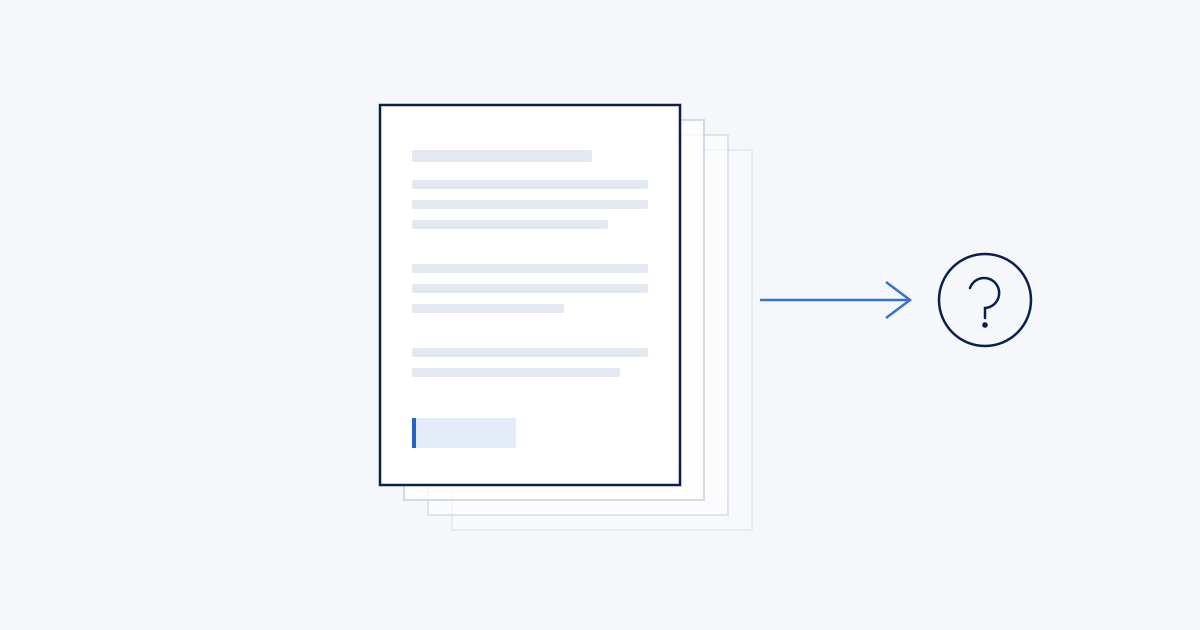
Detection returns a probability. Verification returns a verdict.
An AI detection tool says: 87% likely authentic. The score can be high and the document can still be fake. The score can be low and the document can still be real. The output is uncertainty dressed up as confidence.
The fundamental problem with detection is that you're trying to prove a negative, that no manipulation has occurred, from the artifact itself.
There's a different model. Instead of asking the document “are you real?” after the fact, ask the issuing organization “did you produce this?” at the moment of verification. The answer is binary. There is no probability.
Why this requires the issuer.
Authentication at the source isn't a metadata trick. It's a participation model. The bank, payroll provider, school, insurer, or government agency that produces the document is the only party that can vouch for its origin.
This is also where the economic flip happens. The same organizations that produce these documents, and receive nothing today when third parties verify them, can participate in a verification economy where every authentication of a document they issued creates value for them.
- Verifiers receive a definitive verdict, not a score.
- Issuers turn an unmonetized output into recurring revenue.
- Document fraud, as a category, becomes structurally harder.
The shift isn't about better detection. It's about a different question.